From conflict to community at college

Five Antioch students were allowed to continue taking summer classes three days into the session after an agreement was worked out last Thursday between students and administrators over overdue room and board fees. The action, after intense college community dialogue, brought to resolution the first instance of a significant student protest at the revived college.

The agreement followed a late-night meeting attended by 69 of the 96 students on campus, who rallied behind a handful of students burdened with mounting debts from fees — about $8,800 per term before need-based discounts.

At issue was a deadline imposed by the college in June where students who had outstanding balances and hadn’t agreed to a plan to repay within six months would be barred from taking summer classes, which began July 9. That deadline to have a repayment plan was later extended to July 12, allowing all students to attend summer classes for at least the first week.

Ahead of the agreement, Antioch President Mark Roosevelt flew back early from a family vacation in Nantucket, arriving at 4 a.m. Thursday morning to spend much of the day discussing the matter with students.

The agreement — drawn up by a small group of students working overnight on Tuesday — extends the deadline to arrange payment to the end of the term in September, creates a financial task force of students, faculty and staff and proposes other ways to promote financial literacy and improve the financial situation of students.

Before it went to administrators, the student proposal was supported by the campus governing body Community Council, or ComCil. To ComCil President and second-year student Elijah Blanton, it was an intense week, but the outcome was seen as a positive example of students, faculty and administrators working together to solve a problem.

“I’m proud to be an Antiochian today,” Blanton said after the student plan, which he helped to draft, was approved. “It’s one of the problems created in Antioch’s beautiful rebirth and we’re coming together as a community to solve it.”

Solutions vary

According to Blanton, solutions for financially-strapped students may include on-campus jobs and higher-paying co-op positions. The college could partner with a private bank to extend loans. And financial literacy among students could be improved. In addition to a teach-in held last weekend on financial issues, there will be a unit on student debt and financial literacy during the global seminar on education open to all students this summer.

The recent move by the finance department to more urgently collect unpaid fees stemmed from a desire to not let student debt build up and to make sure that students are annually filing federal aid forms, Roosevelt said.

“Any college needs to have a process to obtain dollars owed that have been agreed to,” Roosevelt said. The college deals with each student’s finances on an individual basis and very few students are not already on mutually-accepted payment plans, he said.

In addition to agreeing to the student plan, Roosevelt and other administrators apologized at a community meeting Thursday for poor communication that occurred over the previous weeks.

“I feel what has been asked on the part of the students is legitimate and the communication has not been robust enough,” Roosevelt said.

Antioch students, who Roosevelt said are a more needy group than the at-large college population, are already given financial support in the form of the Horace Mann Fellowship — a full-tuition scholarship for the college’s first four classes — and reduced room and board fees, which are based on need. The average Antioch student is charged roughly 50 percent of the $8,800 room and board fee, Roosevelt said.

Still, for some students, those discounts aren’t enough. One problem, according to Blanton, is that Antioch has yet to be accredited. As a result Antioch students cannot receive federal financial aid, which often includes loans that can be deferred until after graduation. Loans from private banks can be hard to negotiate, especially for low-income students without someone to co-sign, he added.

Though the decision to collect unpaid fees had nothing to do with accreditation, Antioch does need to function along federal aid guidelines in preparation for when the college does become accredited, Roosevelt said. According to Blanton, the college may be recommended for accreditation in November, six months after which students may be eligible for federal financial aid.

While students had been receiving regular room and board bills from the college, there were no consequences if they went unpaid. That abruptly changed last month, when the finance department sent a letter to students asking them to pay up, or they would be unable to take classes. Students were “paralyzed,” and some began packing up their dorm rooms, according to assistant literature professor Geneva Gano, in part because many didn’t realize they could arrange a payment plan with the finance department ahead of a July 1 deadline. Even when they learned that payments could be spread over the next six months, some still could not pay.

Coming together

In June second-year student Eros created an online petition on the website Change.org that garnered the signatures of 125 current and former Antioch students and other supporters. It asked the college to postpone its deadline and create more flexible payment options.

Wrote first-year student Eric Rhodes at the petition’s website: “While I am lucky enough to not be financially affected, the way things are being handled means that some of my best friends at the school and some of the most talented would be forced to leave. It’s hard for me to imagine what our college would look like without them.”

Students then went away on a short summer break. During that time the deadline to pay, or agree to a payment plan, was extended two more times, to Monday, July 8, and then to Friday, July 12. So when students returned to campus over the weekend of July 6–7, they quickly organized to push for an extension of the deadline. Even though at that point only five students were still unable to pay (even with a payment schedule) their fellow students came to their aid in what Blanton described as a show of solidarity.

“It was incredible to see everyone come together and support each other,” Blanton said.

According to Gano, the literature professor, the crisis event ended up being “a positive example of collaborative efforts,” and will likely result in a more open and conciliatory approach to student finances. Blanton also sees the bright side.

“It’s a really difficult situation to restart a college and we’re doing a really good job and this is an example of that,” Blanton said. “A huge reason I’m here is I get to restart a college. It’s like an extra class, but it’s consistently my favorite class.”

The post From conflict to community at college appeared first on Yellow Springs News | Yellow Springs, Ohio.

A college village in Antioch’s future?

On a recent visit to Antioch College, architects from MacGlachlan, Cornelius and Filoni, who have designed for dozens of schools in the Northwest, noted the unique level of integration between the college and the village of Yellow Springs. According to Antioch College President Mark Roosevelt, the visitors said “they had never been to a college as closely tied to a village as we are.”

From Olive Kettering Library and Curl Gym to Rockford Chapel, the tennis courts and WYSO, the spaces and services that are shared between the college and village are both deep and historic. And the tradition has worked so well for so long, that Roosevelt for one sees value in perpetuating the overlap.

“We’re a small college and a small village, and there are a lot of things it makes sense to do together — it would be kooky not to share these between the college and the village.”

So while the college and the village collaborate to fund the new wellness center, the theater building and the Glen, there is one more horizon of integration the college has begun planning for. The issue of community housing on the college campus became public several months ago when the Village of Yellow Springs dug into the final stages of its zoning code revision. Antioch facilities manager Reggie Stratton appeared at several Village Council and zoning meetings stating the college’s need to include residential uses within its E-1 education zone.

The possibilities are wide open and the plans for housing won’t happen for another five to 10 years, Roosevelt said. But the idea, in its nascent conceptual phase, is that the college could in the future host an energy-efficient single and multi-family housing complex on its campus for faculty, staff, alumni and villagers who are as committed to the future of the college community as they are to their own.

The idea of creating an Antioch College village is the ultimate collaboration between the college and the surrounding community of residents. It’s also an opportunity for the college to have a continuing source of revenue and support. And though the target residents have yet to be defined, the community would ideally be composed of a mix of ages and include people who are looking specifically to become generative members of the community.

“We would offer something that’s the opposite of isolation, with healthy food, the Glen, wellness, the theater,” Roosevelt said. “This is offering people an opportunity to contribute and be part of something — because people have a yearning to be part of a community.”

Developing housing on campus would not be unprecedented at Antioch. According to Antioch archivist Scott Sanders, the college has a tradition of providing housing for its faculty and staff as a way of attracting the best minds to campus. The college established apartments for young faculty as early as the 19th century in Birch Hall and North and South halls. In the early 1920s, the college began buying homes within the Limestone, Phillips, West Davis and West Whiteman blocks for its faculty and staff. In the late 1930s, the college worked with Hugh Taylor Birch to purchase land for faculty homes south of campus as well, along Rice Road and President Street. The college also purchased homes in the village for student housing, such as the former Mills House (on Mills Lawn) and Greywood (now owned by Anthrotech).

But building the kind of campus community Roosevelt wants is different from the college’s previous models. And because it’s an undefined concept so far, “there is no language for it because it doesn’t exist yet,” he said last week. But Roosevelt knows what the community is not: a retirement community.

According to a 2007 article in the Journal on Active Aging, university-based retirement communities have been on the rise for 20 years and currently exist on over 60 campuses both small and large across the country, including Oberlin, Dartmouth, Penn State and Lasell College in Massachussetts. But those models stress the cultural advantages for seniors “in their golden years” and often include continuing care facilities, infantalizing their aging residents into passive, restful roles.

What Roosevelt envisions is something much more dynamic, for a wider range of lifestyles, including “next-chapter individuals” who are “at retirement age but have no interest in retiring,” he said.

This year is set to be a banner fundraising year for the college, which expects to bring in $21 million by the end of December. But that level of giving is hardly sustainable, Roosevelt said, and cannot be relied on to fill what the college anticipates will be a significant gap between costs and revenues. Once the college is functioning with 600 students, annual operating costs are expected to reach about $10–15 million, but anticipated revenues will likely only total $6–9 million. And judging by the challenges of many liberal arts colleges around the country, Antioch must prepare for a different financial model than it had in the past — one that involves a lot of resource sharing.

The location for campus housing has not been chosen, but the college does own vacant property all along the western side of Livermore Street at North, Center and South College streets, as well as the area behind the former student union building and along President Street. And if the union/Antioch Inn and the Sontag-Fels buildings are torn down in the next few years, there could be quite a bit more property available on the perimeter of the campus to use for housing that would benefit both communities.

Several organizations in Yellow Springs, including Friends Care Community and Home, Inc., have attempted to fill what they see as a need for senior housing in the village. Both Friends and Home, Inc. tried to develop a multi-family unit on the Barr property, and having run into road blocks, both entities are regrouping for projects elsewhere in the village; Friends on its Herman Street campus, Home, Inc. at an undisclosed location in the village.

While the college is sensitive to other housing efforts in the village, they haven’t forged any partnerships because they’re not sure just yet what they want to create. So while they focus on accreditation, building faculty and student numbers and renovating the core campus, the idea of housing has plenty of time to mature. Stratton knows that there is a lot to do before community housing comes to the fore.

“Our focus right now is accreditation because we need to get on solid financial ground for stability first,” Stratton said last week.

Antioch College fundraiser takes challenge

Brian Williams was recently named the new vice president of advancement at Antioch College. He begins next month. Williams, who has a law degree, has been a fundraiser at the Childrens Museum of Indianapolis and Knox College. He hopes to help Antioch reach a yet-to-be-determined fundraising goal of around $75 million over the next few years. (Submitted photo by Dennie Eagleson)

Brian Williams was recently named the new vice president of advancement at Antioch College. He begins next month. Williams, who has a law degree, has been a fundraiser at the Childrens Museum of Indianapolis and Knox College. He hopes to help Antioch reach a yet-to-be-determined fundraising goal of around $75 million over the next few years. (Submitted photo by Dennie Eagleson)

If fundraising is critical to Antioch College’s future, then a lot rests on the shoulders of Brian Williams, its new vice president of advancement.

Williams is tasked with helping the college reach a yet-to-be determined fundraising goal in the range of $75 million over the next few years, money Antioch would use for operations, campus improvements, student scholarships and faculty salaries. That sum is not insignificant for the recently reopened college, which also boasts a $44 million endowment. But after a banner fundraising year, strong admissions and solid alumni support, Williams is confident he can get the job done.

Williams starts next month. He takes a position held by interim vice president of advancement Reid Crawford, who stepped in when Steve Sturman departed in January for a job closer to home at Valparaiso University.

The 48-year-old Williams, who most recently worked for seven years as the VP of development at the Childrens Museum of Indianapolis, views Antioch’s re-emergence as an exciting challenge. Having spent most of his life and career in higher education, Williams said he jumped at the opportunity to return to the field.

“While there is a lot of risk in what Antioch is trying to do, the potential upside is so dramatic that it would be terrific fun and a privilege,” Williams said this week. “I’m hugely impressed that Antioch is doing what it’s doing. There’s no place that a person who is interested in working in higher education can go and do and be part of a liberal arts college re-emerging.”

A firm believer in the liberal arts model, Williams said Antioch needs to show that a liberal arts education is exactly what is needed in the world today, despite being a brand of education on the decline.

“When you talk about what skills employers are looking for and what skills liberal arts colleges instill in their students — effective communication, knowledge of multiple languages, the ability to discriminate among different ideas — those are things that liberal arts colleges do well,” Williams said. He added that an intimate setting and close relationship between faculty and students are only possible at liberal arts colleges.

Williams grew up in Crawfordsville, Ind., the home of Wabash College, where his father was a professor and chair of the religion department. Later he got degrees from Knox College in Galesburg, Ill. (American studies), University of Wisconsin (history) and Indiana University (law) and was a senior lecturer in the law schools of both Northwestern University and Cornell.

In 2000, after eschewing practicing and teaching law for fundraising, Williams became the director of planned giving and later vice president of advancement at Knox College. Williams said he helped the struggling private liberal arts college with 800 students at the time navigate a difficult financial period marked by a small endowment and leadership transitions. At the Childrens Museum, where Williams has worked since 2006, he helped raised $8.5 million in annual combined revenue and frequently secured donations in the high seven figures.

Williams enjoys the work of fundraising, which, he said, can be rewarding.

“Done right — and that’s an important qualifier — it can be one of the most gratifying occupations because it’s all about if you’re passionate about the institution,” Williams said. “Really the role of the fundraising is to identify the opportunities that people want to invest in and show them how those investments pay off.”

At Antioch, Williams plans to focus on developing relationships with major donors and foundations and keeping alumni and other likely funders abreast of Antioch’s progress. He wants to “expand the net” of potential donors so the alumni don’t get “tapped out,” as their continuing support is vital to the college’s future, he said. And he plans to key in on the “small cadre of very loyal, very generous supporters,” as 90 percent of an organization’s funds are typically raised from just 10 percent of donors.

“The key strategy will just be very effective communication with alumni and other potential stakeholders about the work that’s going on at Antioch,” Williams said. “Fundraising is a little like dating, there is no shortcut.”

According to Crawford, a Washington D.C.-based consultant who has led Antioch’s fundraising efforts in 2013, the college raises about $2.5 million each year from its annual campaign and the rest from major donors. For its fiscal year ending June 30, the college raised $20 million — its best year yet. The Morgan Family Foundation was one major source, pledging $2.875 million over three years. In the two previous years the college raised $13 million and $9 million, according to tax documents.

Crawford attributes the banner fundraising year to growing confidence among donors that Antioch has strong senior leadership, excellent faculty, an active board and success at recruiting students. The recent purchase of the local public radio station (WYSO 91.3FM) and removal of reverter clauses that would have returned control of the college to Antioch University if it failed to be accredited — a $7 million deal that became official this week — are also causes for optimism among donors, Crawford said. The support of alumni, many of whom banded together to purchase the college from the university for $6 million in 2009, remains a critical source of dollars for Antioch, Crawford added.

“We want to show everyone that not only are we doing well in the present, but we have a future because we have the confidence of our friends and alumni, and they show that by giving their treasures,” Crawford said.

The loyalty of Antioch’s alumni has been “intense and immense,” Crawford said. According to a college announcement of the vice president of advancement vacancy, there are currently 17,000 alumni in the college’s network, with 21 chapters in the U.S. and one in Europe and alumni participation in the annual fund for fiscal year ending in 2012 was 26 percent.

Antioch is currently almost entirely reliant on fundraising, as student fees account for less than five percent of the college’s revenue, and fundraising will be key well into the future, according to President Mark Roosevelt in a presentation in May. The cost to operate the college was $12 million last year, a figure expected to grow to $15 million in two years. Even when Antioch’s students begin paying tuition, that money won’t come close to covering the college’s operating expenses and capital needs, Roosevelt said.

Williams added that fundraising is especially important to Antioch since it has a small endowment compared to its “sister colleges” Oberlin ($661 million), Wooster ($232 million) and Kenyon ($185 million).

“Fundraising at Antioch, certainly in the short term and even in the long term, will be crucially important,” Williams said.

Williams will live in the village with his wife, Catherine Lemmer, a law librarian who will join Williams after the fall semester. Their daughter, Cydney, will be attending New York University in the fall.

Antioch College begins renovation to theater and gym

Last week about 100 Antioch College alumni returned to campus to engage in the ongoing work, both creative and backbreaking, of rebuilding their school. This summer’s alumni work week focused especially on the demolition jobs needed to be done before the college can start this year’s slate of renovation planned for the Health and Wellness Center, the Theater building and the campus’s central geothermal heating and cooling plant. The chain-link fence that went up around Curl gym a few weeks ago is indicative of where the initial thrust lies.

According to Antioch Facilities Manager Reggie Stratton, the Wellness Center, to be located in Curl gym, is the biggest capital project to get under way this year. With plans for a new fitness center, lounge, locker rooms, two racketball courts and a new pool, the 44,000-square-foot center is expected to cost $7.2 million.

Along with the fitness amenities, the original Curl gym, built in 1928, will get its former windows restored along the upper perimeter of both the “east gym” and “west gym” — this time with double-paned insulated glass. The back wall of the natatorium will be constructed entirely of glass, with access to an outdoor patio to the south. The west gym will be refurbished, and the south gym will continue to be used as a multi-purpose performance and assembly space.

Also with new roofing, insulation and energy efficient lighting, the Wellness center aims to achieve some level of LEED certification, the second facility on campus (after North Hall) to do so, Stratton said.

The new Wellness Center is expected to be complete by June of next year.

A little ways east of the gym, the theater building is also getting some attention this year. The construction is happening ahead of schedule thanks to private donations of $350,000 and a commitment from the Yellow Springs Community Foundation. Though he couldn’t specify the amount of the grant which isn’t yet official, YSCF President Sterling Wiggins expressed enthusiasm for supporting the college.

“I believe the stronger the college is, the stronger the village is,” he said this week.

The theater, 16,000 square feet in total, is ready for an infrastructure overhaul, with new electric, plumbing and HVAC, as well as a partial roof repair on the north side. On the cosmetic end, the theater will also get new and expanded restrooms, new paint in the front hall, an LED theater lighting system, and all new seating on the existing risers in both the main theater and the smaller black box to the south. The theater seats a total of about 250 people, Stratton said. In addition, the college is rebuilding the theater’s dance floor using the wood from the floor of west gym. About a half a dozen alumni spent last week tearing out the old floor and meticulously removing the nails from each plank for the recycling effort.

All told, this phase of the theater building renovation is expected to cost $1.2 million, Stratton said. It is scheduled to start in earnest in July and be completed by Oct. 1, in time for the arrival of Antioch’s third class of students. Phase II for the theater will depend on financing and is projected to include the rest of the roof, all new windows, and a new set workshop, he said.

Both the gym and the theater, as well as the science building (currently in partial use for both the science and art programs) are to be heated and cooled by the central and primary geothermal plant, another major construction/renovation project slated for this year. The geothermal wellfield consists of 150 wells each 300 feet deep and will be located on the campus golf course. The system uses the steady temperature of the ground to heat and cool water whose energy is then converted to either the heating or cooling needs of campus facilities. The converters, including heat pumps, chillers and heat exchangers, will be located in the maintenance and engineering building just south of the library.

When the geothermal project starts in September, maintenance staff will relocate to an existing structure south of the Kettering building, as the maintenance building itself will also benefit from a new roof, windows and restrooms.

The cost of the geothermal system and trenching to the first three buildings is expected to cost around $4.2 million. That phase should be completed by April 2014. (In the meantime, the theater building, which will be up and running this fall, will be heated with a rented gas-fire unit until it can be connected to the central plant.) Phase II of the geothermal system, again dependent on the availability of funds, will include serving the heating and cooling needs of South Hall, McGregor and possibly the library, Stratton said, by trenching and laying pipeline from the central plant to those buildings.

The Wellness Center and the theater building constitute the third and fourth renovation projects since the college reopened in 2011. Last year the college put $3.6 million into reburbishing some of the science building laboratories and classrooms, and $5.7 million into a complete renovation of North Hall dorm and cafeteria, with a secondary geothermal heating system. Phase II of the science building is projected to cost an estimated $7.4 million and will accommodate both the science and the art departments for the foreseeable future, Stratton said.

“We want to get that done in the next few years in order to allow the arts program to grow,” he said.

In terms of dorm space on campus, Antioch anticipates that Birch Hall and North Hall have enough space for the first four classes, with Case Commons (behind the Coretta Scott King Center) available for additional needs. By 2017, the college expects to have one more dorm online, perhaps either a renovated Spalt dorm or a new building on the horseshoe where Spalt now stands.

Roosevelt envisions ‘Antioch village’

Of the thousands of institutions of higher learning represented at a recent accreditation meeting, only five were looking to be newly accredited — two tribal schools, a bible school, a cosmetology school and Antioch College.

As the only liberal arts college in the country in the process of starting up, Antioch must find new and better ways of operating, and the village of Yellow Springs could play a pivotal role. That was the message of Antioch President Mark Roosevelt during a presentation to college trustees last weekend.

“There are significant ways we can break new ground in relationship with the village we call home,” Roosevelt said.

The new Wellness Center breaking ground this year is projected to strengthen town-gown ties and bring in revenue to the college, but is just the beginning, Roosevelt told the trustees. Antioch’s assets also include Glen Helen, WYSO Public Radio, Antioch Review, Herndon Gallery, Coretta Scott King Center, Riding Centre, Rockford Chapel, a renovated theater building and more.

“We’re not either a simple enterprise or simply a residential small liberal arts enterprise,” Roosevelt said. “How do we think about integrating all of these [assets] to enrich student education opportunities and to enrich the community we live in?”

Collaboration with Yellow Springs is described as the “Antioch Village” concept and is still in its nascent phase, according to Antioch chief communications officer Gariot Louima. It may also include opportunities for seniors to live and learn on the Antioch campus, but there are no immediate plans for senior housing, he said.

Accreditation, meanwhile, remains an important board goal, according to Louima, who said the college can’t conjecture about an achievement date.

During his talk, Roosevelt shared plenty of good news with trustees. It will be a banner fundraising year for the college, with $20 million expected by the end of its fiscal year in June, while annual operating expenses are around $12 million. Far more students enrolled than expected for the fall incoming class — the college’s third class since reopening in 2011. Already 104 deposits have been received. When planned renovations are complete, Antioch will have a $5.7 million dorm, $11 million science building, $8 million wellness center, a central geothermal plant and, potentially, a two-acre solar farm.

But Roosevelt said he doesn’t take much satisfaction in the college’s past fundraising and enrollment success because Antioch still needs reliable revenue sources. Even when students begin paying tuition in a few years, the college will remain reliant on donations, he said.

“When I first came here, I described it as daunting but doable,” Roosevelt said. “Then it was all-in, in order to accomplish it. We’re somewhere past that. We’re well on our way. We are past some of the major hurdles…but it’s unfortunately not safe territory.”

Roosevelt also suggested a new model for admissions. Currently Antioch is “playing the same game” as other colleges by sending out mass mail appeals and email blasts and bragging about its selectivity, Roosevelt said. But, he asked, is that how Antioch College wants to be judged?

With 158 students accepted this year out of 875 applications, Antioch remains highly selective compared to other colleges. Last year, because of a viral Internet article about the college, more than 3,000 applications were received. But with as many as 200 incoming freshman projected in a few years, selectivity might diminish, Roosevelt said. And Antioch might want to find new ways to reach its target student, who in the past has had a combination of academic prowess, grit and positivity.

“We want a particular kind of student,” Roosevelt said. “We don’t admit them just based upon test scores and GPA.”

Roosevelt proposed that Antioch could instead stake out relationships with 30 to 50 high schools in the country from which to draw a diverse student body. School counselors would be educated on the Antioch model. But that would mean ending the pursuit to be more selective.

A related matter is how the college judges its own educational experience, which Roosevelt said remains a major issue with accreditors. While Antioch students are reportedly satisfied with courses, rating them highly for everything from the attentiveness of instructors to the rigor, it’s harder to assess student learning, Roosevelt said. Co-op is notoriously difficult to evaluate, he added. Antioch could look at employability after college, job satisfaction, graduate school admissions or other ways, he said.

“People will judge us by terms they set if we don’t set our own,” Roosevelt said.

According to chief admissions officer Micah Canal, students enrolled in the incoming freshman class have an average ACT score of 26, SAT of 1160 and a GPA of 3.62. There are 33 states and three countries represented, with many students hailing from the top five states of Ohio (22), Texas (11), Pennsylvania (6), California (6) and Wisconsin (5).

Campus renovations

While the board has supported a host of capital projects in recent years, the funds allocated for them has been used up, Roosevelt said. New fundraising must begin for a third dormitory, expected to cost $10 million, which may be needed in a few years if enrollment continues as projected.

Moving ahead this year are renovations to the former Curl Gymnasium, now the Antioch College Health and Wellness Center, and to the theater building. The college may also see ground break this year on a behind-the-meter 550-kilowatt solar array on two acres along Corry Street. That project would be erected not with Antioch funds, but through a power purchase agreement with a solar development company, and is expected to provide for about one-quarter of the college’s electricity needs.

The wellness center will break ground in late spring or early summer, according to a news release last week. Once rehabbed, the 44,000-square-foot facility will have a fully-equipped fitness center, racquetball courts, multi-purpose studio spaces, and a regulation-size indoor swimming pool. The East Gym’s indoor basketball courts will be refurbished, while South Gym will continue to serve as a multi-use space. There will also be a snack bar, locker rooms and outdoor patio, according to floor plans.

The original gymnasium was erected in 1928 and the swimming pool addition built in 1964. Much of the building was in poor condition, according to a recent inspection. There was no insulation in the walls or roof, the floor in the West Gym was buckled due to flooding and the walls in the natatorium were corroded because of chlorine. In addition to fixing these problems, the renovation will be up to Leadership in Energy and Environmental Design, or LEED, standards thanks to an anonymous donation from a villager. The wellness center is expected to be competitive in fees to area YMCAs.

BLOG – Garden Time!

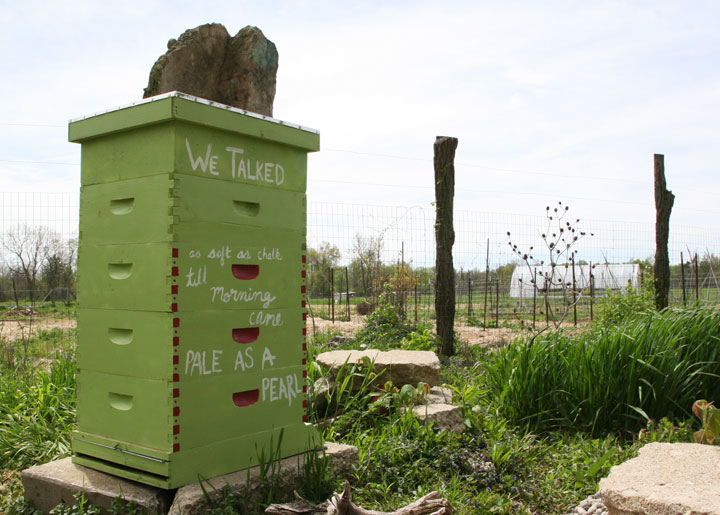
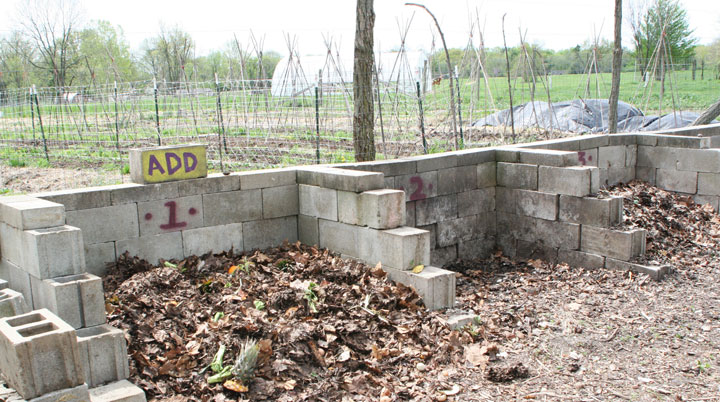
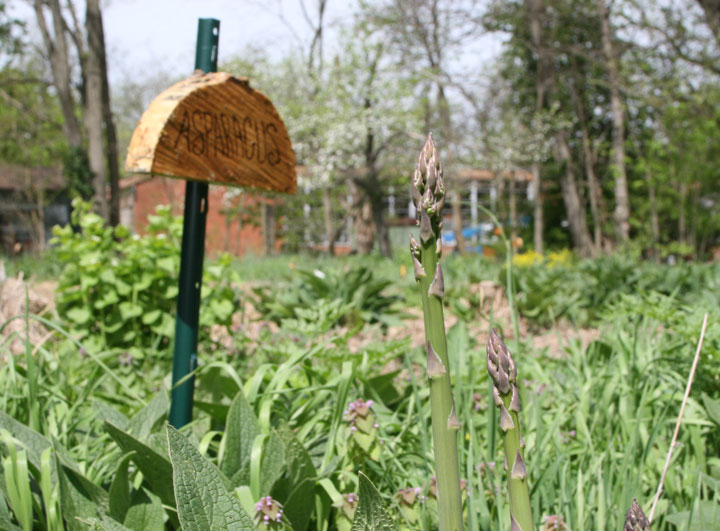
The nooks and crannies throughout the Village that often get overlooked. Today’s blog is showcasing a few pictures from last weekend at Antioch’s Farm and from the community garden at Bill Duncan Park last summer.

Launched in July 2011, under the leadership of Kat Christen, the Antioch College Farm is a forum for practicing sustainability, experiential learning, and community involvement. Situated on the former golf course on the southeast side of campus, the Farm features a food forest, greenhouse, chickens and annual vegetables. Volunteer hours are on Tuesdays from 5 to 7 p.m., all are welcomed!

Click to enlarge the pictures and map of the farm by Al Najjar, class of 2016.

A few plots are available at the Glass Farm, Bill Duncan Park and Corry Street neighborhood gardens. Plots sized 10 by 60 feet are available at the Glass Farm, 10 by 15 feet at Bill Duncan and 10 by 30 feet at Corry Street. To sign up or for more information, call Thor at 767-2729

Click to enlarge the pictures.