‘Deep green’ architect to talk at Antioch College

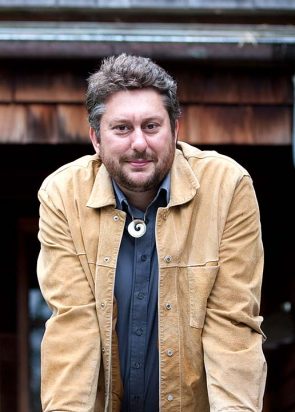
Architect Jason McLennan, a pioneer of sustainable design and creator of the Living Building Challenge, will speak this Saturday, Aug. 13, at 7 p.m. in the Antioch South Gym. (Submitted Photo by Paul Dunn)

Architect Jason McLennan, a pioneer of sustainable design and creator of the Living Building Challenge, will speak this Saturday, Aug. 13, at 7 p.m. in the Antioch South Gym. (Submitted Photo by Paul Dunn)

A “deep green” architect is coming to Yellow Springs. Jason McLennan, recent winner of two major architectural awards and a pioneer of green building design, will give a public talk on Saturday, Aug. 13, from 7 to 8 p.m. at the Wellness Center South Gym at Antioch College. McLennan has designed dozens of innovative green projects around the world, and was recently announced as the designer for Antioch College Village’s cohousing pilot. Seattle-based McLennan and his team will be on campus during the weekend for a series of sessions with college leaders and prospective cohousing community members to kick off the cohousing project. His Saturday evening talk, however, is open to all villagers interested in green design and the ways in which buildings, people and the natural environment interrelate.

“Jason is a very talented designer, somebody in the vanguard of thinking about what it means to develop the built environment in a truly sustainable way,” said Sandy Wiggins, a green building expert and a consultant to Antioch College on the College Village project. Wiggins brought McLennan and the college together; the architect and his team are providing some pro bono services to get the cohousing pilot off the ground this fall.

McLennan is known worldwide as the creator of the Living Building Challenge, a framework that moves far beyond traditional sustainability measures and requires that buildings play a positive, regenerative role in local ecosystems. According to the website of the nonprofit International Living Future Institute, which manages the programs and conducts related advocacy work, buildings that meet all or even some of the Living Building criteria can claim to be the “greenest in the world.”

Talk on Green Design
“Deep green” architect Jason McLennan, a pioneer in sustainability and green design, will give a public talk on Saturday, Aug. 13, from 7 to 8 p.m. in the South Gym of Antioch College’s Wellness Center. The college has engaged McLennan to design the cohousing pilot project for Antioch College Village. McLennan’s talk will focus on connections between that project and worldwide trends in environmental design.

“The Living Building Challenge goes beyond the idea of minimizing harm … to create buildings and projects that are good for people and the planet,” McLennan explained in a recent interview. “It’s a very holistic framework for all the ways [buildings] impact on the world and in turn impact on people’s lives.”

That program led, in 2014, to the creation of the Living Community Challenge, which uses the principles of the Living Building Challenge to set sustainability standards for groups of buildings.

The Living Building Challenge and Living Community Challenge are “the standard bearers,” affirmed Wiggins. “They’re the “tip of the spear,” both in terms of what’s being called for and what’s possible in green design.”

ACV first ‘Living Community’?

At Wiggins’ recommendation, Antioch College adopted the Living Community Challenge as the framework for Antioch College Village, or ACV, in 2014. The college’s embrace of the Living Community standards was one reason he was attracted to the cohousing pilot, McLennan said. “There’s a tight synergy in values and ideals,” he explained.

Though the originator of the Living Building Challenge and founder of the International Living Future Institute, McLennan is no longer an employee of the Institute and is not involved in the assessment of projects.

The Living Community Challenge “scales up” the earlier Living Building Challenge. “Philosophically, they’re siblings,” McLennan said. “But they have different scales and different issues arise.” Rather than assessing a single building, Living Community standards measure the sustainability of a collection of buildings, such as a neighborhood, campus or city block.

There are currently no certified communities, though projects are underway in a variety of cities, McLennan said. The process takes time; the Living Community Challenge includes an upfront masterplan review, so the standards actually help guide the design framework for a project, as well as measure the outcome.

If certified under the Living Community Challenge standards, Antioch College Village could be the first such project in the world, both Wiggins and McLennan emphasized.

In his public talk, McLennan will not only describe the principles and philosophy of the Living Building Challenge and Living Community Challenge, but also provide case studies that he hopes will illuminate “what’s possible in green design,” he said.

One such case study is the Bullitt Center in Seattle, which was billed as the “world’s greenest office building” when it opened on Earth Day in 2013. According to a report aired by Northwest Public Radio on April 18, 2013, the Bullitt Center’s unique attributes include its use of 100 percent sustainably harvested lumber, the world’s only six-story composting toilet system and 575 rooftop solar panels that supply all of the building’s energy. The panels also collect rainwater, which is funneled to a 56,000-gallon cistern in the basement that provides all the building’s water.

The Bullitt Center meets the highest level of Living Building standards. First put forward in 2006, these standards are used to evaluate projects across seven performance categories: place, water, energy, health and happiness, materials, equity and beauty. Each of these has smaller, specific subcategories. Energy, for example, is measured in terms of “net positive energy,” which mandates that 100 percent of a building’s energy needs are self-generated using no combustion-based sources.

While certain metrics, such as for building materials and energy, may overlap with other green certifications such as LEED and Forest Stewardship Council, they are far more stringent than all other existing measures, according to the International Living Future Institute website. And many of the Living Building Challenge criteria bring an utterly novel focus on human well-being, according to McLennan.

“The training of architecture is really about how the built environment impacts the mental and emotional and physical well-being of people,” he said. Under the terms of the Living Building Challenge, these impacts are extended to the health of the ecosystem and the lives of plants and non-human animals within it, he added.

There are currently about 100 Living Building-certified buildings around the world, according to Wiggins, and many more in the process of development. Unlike other certification programs, Living Building projects are assessed based on actual, not projected performance. This means that projects must be operational for at least 12 consecutive months before they are evaluated, adding another layer of rigor to the process, McLennan said.

Cohousing kick-off

Beyond his public talk, McLennan and his team will spend the weekend on the Antioch College campus gathering information for the first iteration of the cohousing design. One key decision is the location of the cohousing project, selected from several potential sites on campus, according to Wiggins. McLennan will also engage college leaders and prospective cohousing residents — specifically, members of the local cohousing group, the Antioch Eco-Village Pioneers — in a programming exercise to elicit basic design criteria for the project, including the design of individual units, the organization of units in relation to each other and the design and amenities of the common house that is a focal point of cohousing communities.

McLennan said he’ll be doing a lot of listening that weekend. “We take a very patient period of listening and learning. We view our project as having two clients: the people and the community writ large, which includes other species and future generations.” So he’ll be making a careful study of place, climate, culture and people, he said.

Though he’s designed many different types of projects around the world, Antioch College Village’s cohousing pilot will be his first cohousing project. And this will be his first time in Yellow Springs and Ohio. But all projects are, in a sense, new to him, he said.

“I don’t like to come into a design project with a predetermined aesthetic. I don’t know what it will look like, and that’s the point. But it will be beautiful,” he promised, with a laugh.

With this weekend’s kick-off session, Wiggins said that the college is on track to complete the cohousing pilot’s conceptual design phase by the end of the year. He is currently raising funds for the pilot, previously estimated to cost $2.2 million for design and planning (an amount that includes some costs of the overall ACV project) and $6.5 million for construction. He is also working with the Village on zoning and planning.

“We’re hoping to begin building this time next year,” Wiggins said.

Seeding a food revolution

Here in the heart of industrial agriculture, a quiet revolution has begun. It’s small-scale, and plans to stay that way. Its dimensions are measured not in acres, but millimeters. Some of the revolution’s most diminutive members are smaller than the period at the end of this sentence.

The revolution is seeds.

Seeds are a powerful “under the radar” aspect of the local food movement, according to Beth Bridgeman, instructor of cooperative education at Antioch College. This fall, she is leading an effort to raise area residents’ seed consciousness. In collaboration with the Rocky Mountain Seed Alliance, Bridgeman is organizing “Seed School,” a six-day introduction to growing, saving and sharing seeds geared to gardeners, farmers, chefs, students, activists, local policymakers and anyone at any skill level with an interest in local food and sustainable agriculture.

“We’re hoping people come from across the Miami Valley and beyond,” said Bridgeman in a recent interview. Seed School will take place Sept. 29–Oct. 4 at the Vernet Ecological Center in Glen Helen. Seeds used in the school will be harvested from the Antioch Farm across the street.

Why seeds?

“It’s where food begins,” said Bridgeman. Consider a locally grown tomato. It could be grown from seed ordered from a seed catalogue — or it could be grown from seed that has dozens or even hundreds of years of history in Miami Valley soil. In the latter case, said Bridgeman, the tomato would be well-adapted to local conditions. And it would carry what she calls “seed stories,” the histories of the people who’ve grown and saved that variety’s seeds through the years.

“There are lots of seed stories in the Miami Valley,” said Bridgeman, who previously worked as an educator in Greene County’s OSU Extension. “This is particularly true in immigrant communities. People who arrive from elsewhere want to eat their own food. They may have brought seeds from their native countries, or they may source and save seeds from plants that resemble their native foods.”

Local seeds have benefits beyond the cultural. “Here in the Miami Valley, we’re zone 5B/6A,” said Bridgeman, referencing the USDA’s regional Hardiness Zones — and noting that the shift in zones is underway because of global warming. “That’s the same zone as Denver!” Plants growing in our region will experience conditions very different from those of dry, mile-high Denver, despite the common zone designation, and seeds harvested year after year from locally grown plants will adapt, over time, to our particular climate. That means greater hardiness and potentially better natural defenses against pests.

To Bridgeman, another compelling reason to plant and replant from local seeds is food security. “I’m learning that you can’t have food security unless you have seed security,” she said. A food security committee she serves on in Dayton has been talking recently about the idea of “disruption” in food systems. “When food is coming from 500 miles away and there’s a breakdown in the grid or transportation system, that’s a problem,” she said. “The closer you grow to home, the better.”

Seeds themselves are under threat. “Ninety-seven percent of seed varieties have been lost since 1900,” said Bridgeman. This is a consequence of market dynamics, she added. “As seed companies have gotten larger and agrichemical companies have taken them over, research has increasingly focused on just a few varieties.” Rather than hundreds of tomatoes, many consumers have access to just half a dozen on grocery shelves. Currently, the six biggest agricultural companies own 85 percent of seed companies, she noted.

These companies are patenting seeds and — even more controversially — individual seed traits, such as drought resistance in corn. “Think about that,” said Bridgeman. “A company owns the idea of drought resistance in corn!”

Many traits are now introduced through genetic modification, she added. Different from the hybridization that happens in nature, and the breeding for specific traits that people have undertaken for centuries, genetic modification involves the insertion of genes from one variety or species (sometimes even crosses between plant and animal) into another. Seeds of genetically modified plants carry the new genome, representing a life form “unseen in nature,” said Bridgeman.

Saving and planting local seeds is one way — at a fundamental level, the way — to restore regional biodiversity and take back control of seeds from corporate producers. “I’m a big proponent of seed sovereignty and agricultural democracy,” Bridgeman noted.

This summer, she and five Antioch students, all of whom work on the Antioch Farm, attended the Seed Savers Exchange conference in Decorah, Iowa. Seed Savers Exchange is one of the largest nongovernmental seed banks in the United States, and the annual conference helps collect and disseminate thousands of heirloom varieties for preservation, scientific study and gardeners’ use.

“I learned how important it is to teach other people — how you need to grow gardeners as much as you need to grow gardens,” said Elaine Bell, ’16. “I’m interested in any opportunity to help change the direction of how we grow our food.”

Anthea Van Geloven, ’17, said she was amazed to realize how much the plant and animal breeds we rely upon for food have been manipulated by humans. “Nothing is anywhere close to what you would find in the wild,” she said.

Both students came back enthusiastic about seed saving, which is the heart, or germ, of Seed School. “We’ll teach people about winnowing, pollination, and harvesting. There will be accessible learning about seed genetics,” said Bridgeman. Her goal is to grow a seed-saving community — one that will flourish well beyond the course.

Seed saving is an art and science that’s as old as agriculture itself. Before seed catalogues and their online counterparts, people saved seeds from one planting season to the next, and shared them with their neighbors. In recent times, such informal seed-saving communities have been augmented by more organized efforts. Some public libraries are creating “seed libraries,” said Bridgeman, using old card catalogues to hold seed packets and information gathered about seeds’ origins. “Open drawer B, and you’ll find Detroit Red Beets.”

Seed banks, such as Seed Savers Exchange and others around the world (the USDA maintains a massive one), are the broadest and most formalized seed-saving communities. Two seed savers from Cleveland, whom Bridgeman met at the Seed Savers Exchange conference, are launching the Cleveland Seed Bank, the only such effort in Ohio.

But all it takes to start a seed-saving community is a few people — knowledgeably — swapping seeds. “Seeds should be available to everyone,” said Bridgeman. At Seed School, and in the communities it sows, the power of these tiny revolutionaries will be.

-To register for Seed School, visit: http://www.rockymountainseeds.org/attend/seed-school/144-antioch. For more information, contact Belle Starr at belle@rockymountainseeds.org or

Beth Bridgeman at bbridgeman@antiochcollege.org. Early-bird registration (before September 1) is $600, which includes all classes and meals. Partial scholarships are available.

Learn seed-saving during a tomato walk at Antioch

Antioch College students will share seed-saving techniques for tomatoes during a Tomato Walk at 10 a.m. Saturday, Sept. 6, on the Antioch farm.

It is the first of several planned events during which students will share what they learned from their summer field trip to the Land Institute, Seed Saver’s Exchange Conference and Whiterock Conservancy. Other events planned for the fall and winter are a Seed School and a pollinator symposium to promote “pollinator pathways” through Yellow Springs.

This summer a small group of students who volunteer, work and co-op at the farm or on Antioch food policy traveled to Iowa and Kansas to hear from leaders in the sustainable agriculture movement about some of its most promising developments. Antioch Instructor of Cooperative Education Beth Bridgeman called the field trip “transformative” as students learned the latest research on how to save seeds, perennialize calorie crops like wheat and sorghum and restore prairie lands.

“It is a much bigger picture than organic, local or ecological agriculture,” Bridgeman said.
Antiochfarm2

Seed Saver’s Exchange in Decorah, Iowa, the largest non-governmental seed bank in the United States, collects, grows and shares heirloom seeds and plants, some of which are endangered. Saving seeds was practiced for millennia until the advent of industrial agriculture and commercial seed companies, which greatly reduced crop genetic diversity. According to the Millennium Seed Bank Partnership, an estimated 60,000 to 100,000 plant species today are threatened with extinction. But local seeds adapted to local environmental conditions grow best here, and should be carefully selected and passed on, Bridgeman said.

“We save the seed that works best in our area, so we’re not using a seed from Siberia,” explained Bridgeman. “And we are recapturing the seeds that used to work well here.”

To undertake a seed-saving project in Yellow Springs where local seeds would be collected, stored, and exchanged, Antioch would have to collaborate with Yellow Springs area gardeners and farmers, students emphasized. Antioch students could help find and document heirloom varieties now in use while teaching local gardeners how to properly save seed, which can be tricky, involving particular isolation, propagation and storage techniques. Students envision an educational event, or seed school here, with the ultimate goal of starting a seed library at Antioch.

Students were also inspired by the work at the Whiterock Conservancy in Coon Rapids, Iowa. There an Antioch alum donated 5,500 acres now being restored to prairie and oak savannah, which once comprised 15 percent of the Iowa landscape, according to Bridgeman. Finally, the students visited Wes Jackson’s Land Institute in Salina, Kan., which has been engaged in experimental research into perennial polycultures for decades.

Read the Sept. 5 issue of the News for the full story.

Antioch College to present farm vision


View a larger image of the Antioch Farm plan.

 
Antioch College will lay out its long-term vision for a 36-acre property on the south end of campus known as the “golf course” at a public meeting next week.

In what Antioch leaders called a project central to the college’s mission to demonstrate sustainable ways of living, the college plans to use the land this year for growing vegetables, grazing meat animals, planting a food forest and constructing a five-acre solar photovoltaic array.

Within five years Antioch hopes to dig a second geothermal well field, pasture more —and larger—animals and designate public paths through and around the property, which will be largely fenced off.

Antioch presents its South Campus Master Plan at 7 p.m. Wednesday, May 7, in the John Bryan Community Center gymnasium.

According to Andi Adkins, Antioch’s vice president of administration and finance, the college organized the community meeting so it could share its plans with both concerned neighbors and supporters of its sustainability initiatives.

“There are people who don’t understand our plan and have misgivings, so we want to answer those questions,” Adkins said. “But we also want to celebrate with our supporters — those who are into sustainable farming and teaching kids how to farm and feed the world sustainably.”

Since the college first made public its plans to expand its farm at a Village Council meeting last August, a group of about 35 to 40 villagers, mostly the farm’s immediate neighbors, have organized in opposition, saying that the “golf course” has been valuable open space since 1930.

Specifically, the group, Yellow Springs Open Space Coalition, disapproves of the college’s plan to fence off most of the property, making it inaccessible to villagers, site an “industrial-looking” solar array there and pasture large ruminants like cows and pigs, according to Mike Kelly of the coalition. Neighbors also contend that the college has not changed its plans to accommodate their concerns, even though they are now part of an Antioch Golf Course Committee.

“People won’t be able to walk their dogs through the golf course, fly kites, throw a Frisbee, camp or continue all the uses that we have had there for more than 80 years,” Kelly said, adding, “I don’t think the college is listening. I don’t think there’s give-and-take.”

Kelly said deed restrictions that limit zoning changes on the “golf course” property demonstrate a long-held Village desire that the land be kept as community open space. When Antioch University sold the “golf course” to the Village in 1981 while under some financial stress, the Village agreed to keep the land as open space. Later, when Antioch repurchased the property in 1991, Antioch agreed to comply with the current provisions of E-1 educational zoning and to not seek a zoning change that would allow commercial or private residential uses on the site.

“What we take from those deeds is that they represent the history of the golf course as community open space, and a philosophy held by the Village and college,” Kelly said.

But Antioch leaders defended their plan for the property this week, saying that they are not violating deed restrictions since they don’t plan to seek a zoning change from E-1 education. Moreover, both a sustainable farm and solar array are a vital part of the college’s mission to find “new and better ways” of living and will help Antioch reach its stated goal of a zero carbon footprint.

Antioch Trustee David Goodman said in a phone interview that Antioch has an opportunity to use the property to lead in the development of ways humanity can live “without destroying the very resources we need to live, like food, water and energy.”

“The Antioch farm is not just a nice, cute way to say we’re green,” he said. “We need to figure out a way to have a physical place on the campus where we can create a model that works economically, practically, socially, spiritually and environmentally.”

Goodman argued that the farm will remain “open space” because it will still be partially accessible to the public but will additionally generate food, sequester carbon in its soil and be more ecologically healthy than mowed grassland.

Becoming a leader in sustainability will also help attract students, make Antioch distinctive among liberal arts colleges, and helps “operationalize” its vision of connecting practical work with academic learning, according to Glen Helen Ecology Institute director Nick Boutis.

“There’s a broad sense that what we’re doing is distinctive,” Boutis said. “The farm is the most significant realization of how we marry classroom experience and work to build an enriched learning environment for students in the context of a significant global issue.”

In addition to Boutis, the following Antioch representatives are expected to speak at the May 7 meeting: President Mark Roosevelt, Facilities Manager Reggie Stratton, Farm Manager Kat Christen, Food Service Coordinator Isaac DeLamatre, Dean of Admissions Micah Canal, Associate Professor of Environmental Science Linda Fuselier, Visiting Assistant Professor of Visual Arts Raewyn Martyn and others. Brett Henderson of Miamisburg’s Solar, Power & Light, which is developing the solar array, will also make a presentation.

More animals planned for farm

The initial phase of the Antioch Farm, which was started in 2011, has included a half acre for annual vegetables, a half-acre food forest of fruit and nut trees and native plants and movable grazing pens covering about one acre for 50 chickens and ducks and six ewes (female sheep). Those uses received Village administrative approval and then were grandfathered in in August by Village Council during an overhaul of the zoning code.

However, Council, in response to neighbors’ concerns, also decided at that meeting that in the new zoning code sustainable farming would be a conditional rather than permitted use in the E-1 education district, meaning that Antioch would have to seek Planning Commission approval for any changes to its farm operation such as adding more animals or barns.

According to farm manager Kat Christen, Antioch doesn’t plan to make any changes to its animal operation this year, but they are hoping to introduce about two cows, five pigs, 50 ewes and 30 goats in the coming years to help manage the grassland more sustainably while simultaneously producing meat for students.

While raising animals has become the most controversial aspect of Antioch’s “golf course” plan, Christen defended the use of animals, saying animals are critical for a sustainable farm because their manure fertilizes the land while the animals keep the grass and weeds down. And since students are now eating meat, raising animals is a way to provide a more healthy and local product for students, she said.

“Grazing animals allows us to distribute fertility and build the soil and enhance the ecological function of that area, managing that land without the use of fossil-fueled mowers,” Christen said.

Antioch will use the accepted sustainable practice of rotational grazing, so animals will only have access to 30 percent of the property at any given time, Christen said. Multiple kinds of animals are important because they eat different plants, she added.

Neighbors, however, still have questions about how many animals the Village will ultimately allow on the property, according to Kelly, citing concerns that animals will smell, pollute the land with manure and attract predators like coyotes and foxes. Antioch initially proposed that the upper limits for animals as a permitted use in the zoning code be up to 1,400 pounds per acre, with additional per-acre limits of two pigs, or 1.4 cows, or 17 sheep, or 35 chickens. However, when Council decided to make farming a conditional use instead of a permitted one, per-acre animal limits were not included in the code.

Antioch does plan to expand its planting areas this year. The South Campus site plan drawings for 2014 show an expansion of the annual garden just south of the Antioch Science Building to 1.67 acres and the planting of a 1- to 1.5-acre food forest along Allen Street near the Antioch School. The plan also shows two rotational grazing pens, of 1.74 acres and 2.15 acres, located south of the garden along the west side of the property.

There are also currently compost piles on the property that recycle campus food and organic waste. Long term plans additionally show a walking path circumnavigating the property and another cutting through between Herman Street and Corry Street, a reserved Antioch School play area just west of the school and protected woods at the corner of Corry and Allen Streets.

Solar request before Planning

Construction could begin on a solar array on the “golf course” later this summer if the Village Planning Commission grants Antioch a conditional use permit to produce solar energy there. College leaders hope to seek approval from the Planning Commission in May or June to construct a 1.25-megawatt solar photovoltaic array on five acres on the eastern side of the golf course along Corry Street. If the Planning Commission approves the plan, more than 3,300 panels measuring around six feet by three feet will be erected inside a permanent chain link fence there. By fall, the array could produce about 50 percent of the college’s electricity.

The Village has been in discussions with Antioch for two years about a large solar array on campus, according to Stratton, Antioch facility’s manager, since the college’s solar array would be connected to the Village grid and because Antioch is currently the village’s largest consumer of electricity.

An onsite solar array is essential to reaching the zero carbon footprint goal set by the college and so the college can “walk the talk” about the threat of climate change, Stratton said.

“We’re not going to depend on the large utility companies to do what’s right because they will extract and burn fossil fuels as long as possible,” Stratton said. “Research shows onsite renewable generation is the way going forward.”

The need to produce solar power on campus was heightened when Antioch moved recently from natural gas heating to a geothermal heating and cooling system, which increased its electricity load dramatically, Stratton said. Even though the village is projected to purchase about 85 percent of its electricity from renewable sources by next year, Antioch wants to go further, since the electric grid still carries electricity generated from fossil fuels.

“The Village is supporting the renewable industry, but what we’re getting across our grid is still coal and natural gas-based,” Stratton said. “This way we know we’re getting clean energy directly to our campus.”

Neighbors, however, see a potential community eyesore in the solar array. They have also expressed concern about Antioch cutting trees down to accommodate the panels and the impact on Village finances of losing such a significant electricity customer.

“We love solar energy, we just don’t think planting five acres of industrial-looking ugly concrete, steel and glass panels instead of open space is a good idea,” Kelly said of the coalition. “I don’t want my bill to go up so I can have solar panels out my window.”

Stratton responded that because of neighbor concerns, Antioch moved the planned solar array slightly west to save a stand of old sycamore trees growing along Corry Street, and that they plan on erecting a gallery of student and community art projects along the fence to make it look more attractive. Furthermore, the village won’t be harmed financially because of flexibility in the town’s electricity portfolio and because Antioch will continue to pay peak demand charges on its electricity use.

Kelly and other members of the Yellow Springs Open Space Coalition look forward to attending the May 7 meeting to ask more questions of Antioch leaders, but they remain skeptical that the college will respond to their concerns. Instead, the group plans on pressuring the Planning Commission to not grant Antioch conditional use permits for the solar farm and later, for large animals.

“Our initial position was we wanted the golf course to stay the same and then we thought they would listen,” Kelly said. “At this point we realize our only position is to speak out at the Planning Commission.”

Fighting West Nile in the village

Recent rains have created a fertile breeding ground for local mosquitoes, who lay their eggs in standing water. That’s why several local agencies are stepping in to take on the mosquitoes, and the dangerous West Nile Virus that some may carry.

Residents are urged to get rid of standing water on their properties by draining gutters and downspouts, emptying flowerpots and other containers and covering up holes in trees. And they should prevent mosquito bites by wearing insect repellant and donning long sleeves and pants outdoors, especially during dawn and dusk when mosquitoes are most active.

This month Antioch College joined the effort to reduce the populations of Aedes and Culex mosquitoes, the two species that carry West Nile Virus. Antioch assistant professor of biomedical science Savitha Krishna is working with her students to find where in town there are high concentrations of mosquitoes and where they’re breeding.

“[West Nile] is one of the emerging diseases and it has be controlled before it becomes out of hand,” said Krishna, who previously worked as a government entomologist in India fighting the spread of mosquito-borne dengue fever and malaria.

Those who need help identifying and eliminating mosquito breeding sites on their property can email Krishna at snkrishna {at} antiochcollege(.)org.

According to the Ohio Department of Health, while 80 percent of those infected with West Nile Virus will show no symptoms, some people can develop a mild fever, headache and muscle aches and about 1 in 150 with develop a severe illness requiring hospitalization. These people may have a high fever, stiff neck, disorientation, coma, tremors, paralysis and may die. Adults over 50, children under 16 and those with existing health problems are at a higher risk for developing severe illness.

Last year there were 121 reported cases of West Nile Virus in Ohio resulting in seven deaths. This week Montgomery County sprayed insecticides at Wegerzyn Gardens in Dayton after the virus was detected in mosquitoes there.

In addition to Antioch, Green Environmental Coalition (GEC), which in the spring successfully pushed Council to forgo the aerial spraying of insecticides, has been promoting ways residents can keep mosquito populations at bay. According to a GEC flyer, residents should:

? Remove or treat any area in your yard that has standing or slow moving water.
? Remove, puncture or drain all water retaining containers in the yard, i.e., cans, buckets, holes in trees, clogged gutters, old tires, birdbaths, flower pots, etc.
? Monitor ponds and water sources regularly for signs of mosquito larva.
? Stock permanent ponds with fish that eat mosquito larvae and pupae.
? Treat home ponds with Mosquito Dunks, which can be bought at local garden stores.
? Maintain window and door screens.
? Use insect repellents and wear long sleeves and pants to prevent bites.

Villagers can also call the Greene County Combined Health District at 937-374-5600 to report a potential breeding site and request the use of larvicide. While the GCCHD will not test for the disease this year due to state and federal funding cuts, they will monitor local mosquito populations and use larvicides when necessary.

Read the full story in the Aug. 1 issue of the News.

Glen may become conservancy

The Glen Helen Nature Preserve has been saved from development several times in its 82-year history. In the 1920s, plans to sell the land to an amusement park developer prompted Arthur and Lucy Morgan to find donors to buy the first properties that became the Glen. Later, in the 1960s, the Glen Helen Association fought off efforts to re-route U.S. 68 and the Village sewer line through the preserve.

If efforts now underway are successful, Glen Helen will be permanently protected from development in a few years. That protection effort took a major step forward this month with a renewed commitment from the 1,000-acre nature preserve’s owner, Antioch College, and a new partnership with the Trust for Public Land.

“We’re closer than we’ve ever gotten to permanent protection,” said Nick Boutis, executive director of the Glen Helen Ecology Institute, in an interview last week. “We’re working to establish a modern conservation easement that hardwires in protection, regardless of changes in politics and economics.”

Under the proposed arrangement, the title for the Glen would be held by a newly-created nonprofit — the “Glen Helen Conservancy.” The Trust for Public Land, a national conservation group, would secure private and public funds to purchase the land and the conservation easement. The Tecumseh Land Trust, best known as a farmland preservation organization, would hold and monitor the easement that limits development. The Ohio Environmental Protection Agency would provide funding for a strict environmental covenant protecting the most ecologically-sensitive areas of the Glen. And Antioch College would place the funds raised in an endowment to allow for the ongoing operations of the preserve.

After the deal is complete, the Glen would be protected in perpetuity no matter what happens to Antioch College, Boutis said. And the college, which would receive a one-time cash payment for the property, would continue to utilize the Glen as a vital resource for its students and faculty through the Glen Helen Conservancy, whose founding members will include representatives from the Antioch College board.

“The interest of the college is protecting the Glen for future Antiochians,” said Gariot Louima, Antioch’s director of communications. “Antioch College sees [the Glen] as an educational resource, and that won’t change.”

Preserving the Glen has been a goal of the village and college for generations, and some protections are already in place. Those who purchased the land intended for it to be preserved in perpetuity. In Hugh Taylor Birch’s original deed of 850 acres to Antioch, Birch gave the land “to the end that the students and faculty of Antioch College and its successors may forever have available, adequate facilities for the study of varied forms of life, for the exploration of past forms and conditions of life…” In the 1960s, Ken Hunt organized country commons on about 70 acres of Glen in which neighbors took out easements on each other’s property.

More recently, 250 acres around Birch Creek and Yellow Springs Creek were protected as a National Natural Landmark, 2.5 miles of the Little Miami River were designated a National Scenic River, and in 2009 the Ohio EPA approved $1.2 million to the Glen to protect its most ecologically-significant areas. That funding will come through once an environmental covenant is signed by the new Glen Helen Conservancy. But most of the Glen has no such protections and even the protected areas remain vulnerable, according to Boutis.

“None of the [protections] have teeth enough to ward off a vigorous legal challenge and none cover the whole preserve,” Boutis said. The new easement and covenant will assure that the Glen cannot be subdivided, developed, or used for commercial purposes. In more pristine areas, the environmental covenant would require EPA consent to even relocate a trail or build a bridge.

Involving the Trust for Public Land is seen as an important step in the process since the group, founded in 1972, brings substantial experience in preserving natural land that the public can access.

Efforts to prepare an appraisal of the land’s development potential and survey its ecological significance have already begun. While the monetary value has yet to be determined, the land’s ecological value is clear, according to Boutis.

“There are few areas in this part of the country as large as this parcel with as many significant areas that have never been logged and farmed,” Boutis said. Most of the Glen has never had development pressure since it went from a Native-American hunting ground, to a resort, to being part of Antioch College, Boutis added.

Within the Glen are several places of historical and ecological importance, including mounds, earthen enclosures, 450-year old trees, scenic rivers, slope wetlands and uplands and other diverse habitats, Boutis said. The Glen is host to rich wildlife, including at least 90 species of birds that were counted in the Glen this spring.

The Glen additionally filters and purifies the area’s water supply, since the Village wellhead recharge zone is largely within the Glen, said Krista Magaw, executive director of the Tecumseh Land Trust, which holds easements, or is in the process of completing easements, on over 19,000 acres of agricultural and natural land in Greene and Clark counties.

“This is our home and the Glen has always been a part of our sense of place to our board and members,” Magaw said. “This is so we know [the Glen] will remain several generations down the road.”